Search This Blog

Tuesday, October 16, 2018

Three Cheers to Uncle Lim


In the course of my hobby and work, I meet all sorts of people all the time.

From millionaires to celebrities and politicians, I do not think of them as anyone more special than the janitor in the civic hall; therefore, I hardly ask to take pictures unless I have special admiration for them.

Being not photogenic, most of the time, I am dragged along to take photographs with people.

To date, I have only asked to take pictures with the late Tan Sri Ani Arope (former TNB chief), Chinese sitcom actress Lai Meng (of Empat Sekawan fame) and Amanah President, Mat Sabu. Kit Siang is the latest in my list. Perhaps, if there is a chance, I would like a photograph with Rafidah Aziz, and not only Siti Hasmah but Dr Mahathir Mohamad 2.0 as well.

I was invited to a dinner where both the elder Lim and the Junior Lim were there. Guan Eng was my senior at Monash back in the eighties and now a cabinet minister. I could have easily asked to take a photograph with him. Nothing wrong with him, but I only chose to be photographed with Kit. Why?

The reason is simple. Kit is a legend. I have read a lot of what he had to say when he was Mr Opposition. Even now, he speaks his mind. For many years, I have agreed with what he has to say about us being Malaysians.

Although he could have been made a senior minister in Tun Dr Mahathir Mohamad's cabinet, he chose to lead a simple life. For all the years that he has served the country, often sacrificing even his personal freedom, Kit was not seeking for a position or another one of those sought-after awards.

There is a saying that when you throw a stone, you will likely hit a Datuk. But this legend stands out from the rest, and without a title, he deserves my respect.

Kit is not the type that is looking for money or government projects. He exemplifies the slogan, "Service Above Self." In fact, I came up with a slogan to remind all our YBs who were elected on May 9, 2018. The $ sign has a big S which stands for Service. In short, when you see the $ sign, think of this: ‘I Serve.’

Kit is an ordinary man on the street. He can walk around without a bodyguard, and everyone will recognise him. To this man who has contributed much to this nation, I would like to give him a standing ovation.

In fact, his whole lifetime is spent on Opposition politics, not something that is easy to do. He has indeed served the nation well. Like it or not, at the end of his life, I earnestly think that he is worthy of a Tunship.

END.

Saturday, October 13, 2018

The Need for Ombudsman Malaysia


By Stephen Ng


For many years, I have been waiting anxiously for the setting up of both the Independent Police Complaints and Misconduct Commission (IPCMC) and Ombudsman Malaysia (Ombudsman).

I have written about it. But, under the Barisan Nasional government, we saw the great resistance from the police to block the setting up the IPCMC.

It therefore brings me great joy when the Pakatan Government agreed to also set up the Ombudsman.

A quick check on the Internet, the Ombudsman is defined as "a government official (as in Sweden or New Zealand) appointed to receive and investigate complaints made by individuals against abuses or capricious acts of public officials."

A lot of issues affecting us have to do with the lack of good work ethics in the mindset of our civil servants. Many of our civil servants are one-eyed Jacks. Now they see, now they don't!

With over 1.5 million civil servants, it is not difficult for anyone to imagine how advanced we can be as a nation if our civil servants have good work attitudes. Sadly, the reality is just the opposite despite a new government has taken over Putrajaya.

Corruption has long been entrenched in our civil service society to the point that even the office boys will ask for kickbacks if we want our documents processed fast. This gives rise the runners who pay to get jobs done.

But, when you as an ordinary person complains, you do not get the attention that you deserve unless, of course, you are a member of cabinet. Does this sound familiar?

For the past 25 years, I have been following up on a number of government agencies, departments and ministries -- from City Halls, Municipal Councils to the Land Office and the , and from Ministry of Housing & Local Government to the Ministry of Education.

To those that are good, I give the credit, but mostly, I had to crack the whip in order to see the results. Because I am persistent, I take the trouble to go all the way to the top or expose the issue in the press.

Often, with a camera in hand, I would write about issues affecting people, and the moment the article appears in one of the newspapers, solution would be at hand. This was particularly true during Tun Dr Mahathir Mohamad's tenure as the fourth prime minister of Malaysia. But things deteriorated, and it got worse during Najib Abdul Razak's time.

A number of years ago, when I was working with an private institution of higher learning, I discovered a number of our local and international students using a monsoon drain below the highway to get across to their apartment.

After I wrote an article for The Star Metro using the pseudonym, David Ng, the Kuala Lumpur City Hall (DBKL) finally responded by building a flyover across the highway.

In another case, a housing estate has been without streetlights for at least 25 years. After I wrote a one-page article in Malay Mail, on the same day, Tenaga Nasional employees came to plant the streetlights.

They worked non-stop from noon till very late at night to install the streetlight poles. There was a lot of joy in the residents when their streets were finally lit up. I later learnt that it was the late Tan Sri Ani Arope who acted upon reading my article. His personal assistant and I became good friends since then. Tan Sri Ani and I also communicated frequently in the last few years of his life. A great man of virtue, indeed!

To solve problems, I had to use the media to hype up the issues in order to get some attention. For example, when I discovered that my Mom had a Qualified Title (Hakmilik Sementara) for 40 years, it took me two to three years with the help of the Member of Parliament, Dr Tan Seng Giaw and a lot of publicity in the media to finally get the titles changed to Full Titles (Geran) for the entire housing estate.

Not many people know this but I was the one who forced the predecessor to the Malaysian Communication and Multimedia Commission (MCMC), Celcom, Maxis and Telekom to look into the use of 999 as an emergency line on mobile phones. It started when I discovered that if you dialled 999 on the mobile phone back in the 90s, it would go to the nearest district police station (IPD). At night, there would be no one picking up the phone. After much negotiation following my highlight, finally the telcos agreed to use a central emergency response unit. You can now dial 999 (or 112) on your mobile phone, and the line would be connected to a centre that manages all emergency calls. 

There were many other issues that I had to pursue at great length before I saw the outcome. Even at this point in time, I am involved in a number of issues affecting others and I am pursuing all the way to achieve the results.

Despite many letters and meetings with the civil servants, often nothing gets done at the end of the day until you kick up a big fuss. But, why should this be? If the civil servants adopt a positive attitude towards serving the taxpayers, we would not have so many problems.

People would not have to run around just because some lazy officers refuse to solve the problem brought to their attention.

This is why we still need the Ombudsman to put civil servants on their toes. I look forward to the establishment of Ombudsman Malaysia.


END

Wednesday, October 10, 2018

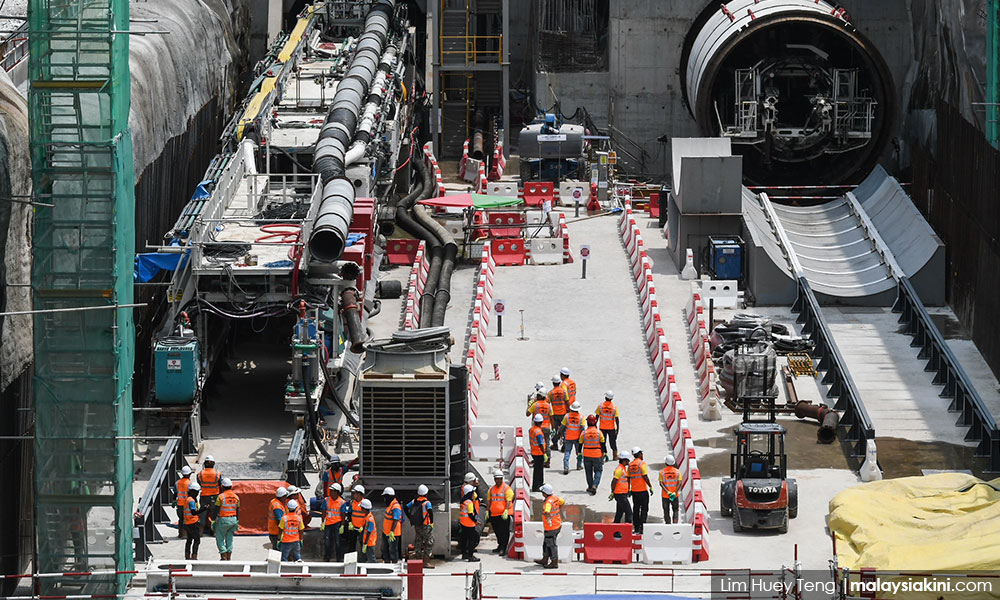
MMC-Gamuda only has itself to blame


Photo Credit: https://www.malaysiakini.com/news/446788

By Stephen Ng

After a failed negotiation with the Government, MMC-Gamuda is now looking to be invited for re-negotiation.

This is after the consortium kicked up the dust after the initial negotiations failed.

The statement that the consortium finally issued today to "urge all stakeholders especially (its) staff, subcontractors and suppliers to remain calm" has come too late.

The statement should have been issued earlier without causing any further damage to the government of the day.

The consortium has failed to realise that the rakyat is watching the way it conducts its business. MMC-Gamuda should not think that it can twist the arm of anyone in the Malaysian Government.

Now that it realises that they cannot bully the Government, it wants to go back to the negotiation table without even coming out with a public apology.

The Government should not invite the consortium to the negotiation table again; instead invite them to submit a new tender and compete with other tenderers to see who can deliver the job at a better price to the country.

END.


Tuesday, October 9, 2018

Gamuda-MMC from my point of view


By Stephen Ng

A number of people asked me what I think about the government's decision to terminate the contract with Gamuda-MMC.

This article will sum up my views. They are strictly my personal views  but before I go on, you should first read an open letter from Tony Pua, political secretary to the Minister of Finance.

The decision was made after careful deliberation by the cabinet. This, of course, followed many rounds of discussions between Lim Guan Eng and his team, with the top management of Gamuda-MMC.

There is no reason why the Malaysian Government would abandon the MRT2 project although its coffers have been left high and dry by the previous regime under Najib Abdul Razak.

With billions of Ringgit being siphoned off, the Pakatan Harapan government which took over Putrajaya has to settle huge debts and repayment of taxes owed to the people.

Naturally, the Government has an obligation to save every single Sen, and use it to pay the debts without creating further burden to the people.

Even the ordinary people were willing to come forward to raise funds to help pay off the RM1 trillion debts incurred by the Najib regime.

Under such circumstances, Gamuda-MMC should not behave like a big boy trying to arm twist the government of the day.

On top of that, they should not kick up a fuss for the failed negotiation. This has turned them into a scorn to the nation.

It appears to me that the campaign that they have hyped up is run by some public relations consultants. Everything appears to be coordinated by some professionals behind the scene.

It goes without saying how much Gamuda-MMC must have paid for these professional campaigners.

Why does Gamuda-MMC have to do this? This is a question that many of us have asked.

It is easy to hype up the numbers and make things look really bad after the government terminated its contract, but Gamuda-MMC as a government contractor must know that under the new Malaysian government, it is no longer business-as-usual for them.

For all Malaysians, a new contractor which can do the job better at a cheaper price would still be the best option.

I should also add the following comments by an engineer in the construction industry:

"Yeah I guess the previous government has indeed created a group of spoiled brat cronies.... Not forgetting that for the longest time Gamuda has been the biggest bully of all.... Bullying even the likes of IJM, SUNWAY and others.... And saving every penny they can is the correct way forward ....which is exactly the government we wanted to vote in...."

After all, we are also consumers. If we find that Pallas shoes are much better in quality than Bata, why should we spend so much to buy the Bata shoes?

END

An Open Letter to MMC-Gamuda


An Open Letter to MMC-Gamuda

By Tony Pua
Political Secretary to Minister of Finance
Member of Parliament for Damansara
10 Oct 2018


Dear Directors of MMC-Gamuda,

Let me applaud you for putting up a great show since the Minister of Finance, Lim Guan Eng announced the Cabinet decision to

(i) accept the offer from MMC-Gamuda to reduce the cost of the MRT2 Above Ground works by RM5.2 billion to RM17.4 billion (23% reduction) in the form of a turnkey contract and

(ii) terminate the Underground contract as both parties could not reach an agreement on the required price reduction.

You have issued a letter proclaiming innocence, claiming that you were awaiting for an offer from the Ministry of Finance (MoF).  You questioned the qualifications of the independent engineering consultant we have engaged. You implied that the decision to terminate was hasty and ill-conceived.  You sought sympathy claiming the loss of jobs for no less than 20,000 people (wow!).  Your social media actively promoted a campaign to “Save 20,000 Jobs” asking Malaysians to sign the petition.  There are viral Whatsapp letters from first class honours engineers regretting support for Pakatan Harapan in the last general election.

The performance and mobilisation of the above campaign are nothing short of impressive.  The question of cost of the project to the Government was conveniently ignored.

We had no intention of engaging with you in a public war of words. We tend to reserve that for our political opponents.  And after all, we wanted to continue the good working relationship to complete the RM17.42 billion worth of Above Ground works.

However, the obvious brazen attempt to paint yourself an innocent victim to an unjust Harapan government required a response to set the facts right and record straight.

1. The original Underground contract was awarded for RM15.49 billion. MRT Corp awarded additional RM1.2 billion of variation orders which resulted in the revised contract value of RM16.71 billion.

2. After numerous meetings and discussions, you wrote to the Minister on 15 August to offer a revised price of RM15.1 billion.  This was mostly a result of shelving the 2 underground stations at Bandar Malaysia North and South.

3. Subsequently on 7 Sep, you offered to reduce the price further to RM14.58 billion for the Underground contract (making it RM32 billion for the entire MRT2 project).  This represented a cost saving of RM2.13 billion or a 12.7% reduction.  In the words of the Gamuda director at the meeting with the Minister on 4 Sep – “we offer what we can offer, but anything beyond that will be meaningless to continue”.

4. However, based on the study by the independent engineering consultant, MRT Corp should expect total savings between RM4.19 to RM5.79 billion for the estimated remaining 60% portion of works yet to be completed.  Yes, this potential savings is just for the balance of works to be completed.  Imagine the potential savings if it was for the entire contract.

So the question to be deliberated upon by this new Pakatan Harapan government is very simple.

A. Do we say, “it’s OK la, let’s just accept the RM2.13 billion reduction offered by MMC Gamuda”?  After all, we can take this figure and boast to Malaysians of our ‘magnificent’ achievement, for they would know no better that we might have left another RM2 billion of potential savings on the table. Furthermore, it will certainly save us the trouble of having to deal with the negative publicity and the new international tender exercise which has to be carried out. Too much work... Or

B. Do we honour the mandate and trust the people has given us and maximise the savings we can reasonably derive from the project? RM2 billion can pay for 5 hospitals, or 50 schools. RM2 billion is hell of a lot of money when I see my MoF colleagues who are struggling and scrimping to find RM50 million savings here, and RM80 million cuts there for the upcoming Budget.

The Cabinet obviously made the decision to pick the latter.  And you seriously telling Malaysians to blame the Cabinet for the termination?

Or would you then pick a different target, as you implied in your media statement, that the independent consulting engineers aren’t sufficiently qualified – despite employing more than 500 staff with a track record of having completed more than 80 projects in 24 countries outside of Malaysia?

Or was it because the government-appointed independent consulting engineer exposed the frequently expounded lie that the cost of MRT1 and MRT2 are well-below the average cost of construction of various Asian Metros, because no one was actually able to substantiate the data provided?

Should we instead question why MMC Gamuda had initially agreed to, but subsequently refused to share costing data with the independent consulting engineer to justify its cost, claiming “trade secrets”?

To the 26 year old first-class honours engineering graduate, I empathize the turbulence you are facing in your life today which is due to no fault of yours.  However, should Gamuda decides not to retain your services, it would only be their loss, because you would build an equally successful career in many other companies.

To the purported 20,000 workers who, according to MMC Gamuda, would lose their jobs as a result of the underground contract termination, let me emphasize that the Malaysian government is not terminating the project.  You will find plenty of opportunities when the new project is awarded at a lower cost, while the savings generated would mean even more projects for the future.

But perhaps, instead of starting a petition on Change.org to seek the Government to reverse its decision on the termination, it might be more productive to start a petition to ask your bosses at MMC Gamuda to make the Malaysian government an offer they cannot refuse.

Thank you.

Improving Public Transportation – Getting to the Bottomline

Improving Public Transportation – Getting to the Bottomline 

By Stephen Ng 

While writing this piece, hundreds of stage buses are left to rot in the junk yards after the consortium formed, and supposed to manage the public transportation system in the Klang Valley, failed to deliver. 
We have also seen the implementation of all three railtrack systems – the monorail, the light rail train and the KTM Commuters – and now, the Mass Rapid Transit (MRT) system, but despite huge public spending, our public transportation is nowhere as efficient as even the neighbouring country, Singapore. 
As pointed out by a friend, most of the urban transport planners in Singapore are in fact Malaysians, so why is it that these brains that we have produced over the years not been able to benefit the country where they were born?
Several years ago, I did a study on the public transportation system in the Klang Valley. Like it or not, we have one of the best network of train tracks available. 
With the existing commuter network, one can get as far as Seremban, Port Klang and Rawang. This has since been extended. 
Weaknesses
However, the greatest weakness is connectivity between the different systems. For example, Sentul has two terminal stations – KTM Komuter and the LRT, however, both stations are nowhere near to each other. Why?
The KTM Komuter trains on the Sentul-Port Klang route crisscross the other trains on the Rawang-Seremban routes at one of the stations. This causes a delay to the schedule. 
Assuming a commuter rides on the train from Kepong to Sentul. It is fine to hop off from one train and immediately step into another train en route to Sentul. However, on arrival to Sentul, how does one expect to go to the wet market from there? 
Taxis are supposed to provide the much-needed short distances, but try taking a taxi during peak hours, and see if you can find any taxi willing to pick you up without charging an exorbitant fee! 
Their reason? Because they have to pay an exorbitant fee for a taxi license, which could have been issued for just a nominal fee to encourage even single mothers or unemployed retirees to take up taxi services the way how retired Singaporeans have been recruited to be gainfully self-employed.
We can understand that taxis provide a different level of comfort for those who can afford to pay. However, for the ordinary Malaysian wage earner, other forms of public transport would have to be the shuttle buses. 
Why is it that we cannot organise our public transport system in such a way that there will only be a few depots for both long-haul buses and trains. 
One reason why buses are inefficient to cater to the needs for public transport is because they have to stop at nearly every bus stop to pick up passengers. There is also the massive traffic jams that hold the buses up that they are unable to circulate on their routes frequently enough. 
Why can’t these stage buses be used as express buses to ferry people from one town to one or two major bus stations near the city of Kuala Lumpur? From there, let the shuttle buses pick up their passengers and ferry them to their destinations based on fixed routes. 
Perhaps, the Government should consider reviving the Mini Buses which used to serve the people well, except for a few incidents caused by some bad drivers, a phenomenon that never cease to haunt us despite one consortium after another taking over the public transportation system in the Klang Valley.
As long as we have enough shuttle buses to reduce waiting time, people would not mind parking their cars at the train or bus station, hop on the train or bus to a depot in Kuala Lumpur. After all, no one wants to get caught in a traffic jam! 
Four Major Selling Points

Throughout the research I carried out, I decided that there were at least four major selling points if we want to convert daily commuters from driving their own vehicles to work, to become users of public transport. 
Firstly, it is comfort. People want to feel comfortable when they are taking public transport. This is where our public transport system has failed badly. 
Secondly, the trains or the buses must always be reliable. This means they have to follow strictly the timetable. I used to give thumbs-up to the LRT and the Monorail but not the KTM Komuter trains. There were times when I was grumbling because it was either too packed to even get in, or it was delayed due to some faulty engines.
Thirdly, and I think is the key, is the frequency of trains and buses. People dread taking public transport because they know that if they miss the bus or train, they would be delayed by at least an hour or so before the next train gets them to their destination. 
By having higher frequencies (or reduced waiting time), you automatically solve the congestion problem in a sardine-packed train and make travelling more comfortable and predictable for most passengers. 
I bet, coupled with economical bus or train fares, which I consider as the fourth selling point, we will be able to lure more people to take public transport.  

END

Monday, October 8, 2018

National language does not lead to national unity


By Stephen Ng

There is too much fad over the idea of national language leading to national unity.

After reading an article in Free Malaysia Today by one Moaz Nair, I decided to write this piece to prove that this is nothing but a figment of one's imagination.

I am not against the learning of Bahasa Malaysia. Like any other languages, we ought to master the language if we do not want to be left behind in nation building.

However, one has to just look at countries where there is only one language used. The people in Ireland and those living in Britain both speak English, but they have been divided for many years.

The Arabs speak one language, but they are hardly united. North Koreans speak English like the Americans, but both nations are at odd with one another.

The Chinese in Malaysia speak Chinese but we can hardly say we are united as one people with the people in China.

Malays in this country are also divided because of their political ideology. In the last general election, we know that they voted in three different directions.

Do they not all speak in Malay? So, why are they not united despite having the same mother tongue?
Remembering 4 local TV shows we once loved

I recall many years ago, there was one Chinese sitcom acted by four adults. Ah Chek spoke in Hokkien, while Wong Ho spoke in Cantonese. Lai Meng was Cantonese, but in the show, she spoke in Hakka, while Hon Ying spoke in Cantonese.

What amazes me is that, despite having different dialects, they were all friends. Hence, the sitcom was known as Empat Sekawan.

There can be national unity amidst diversity.


END.